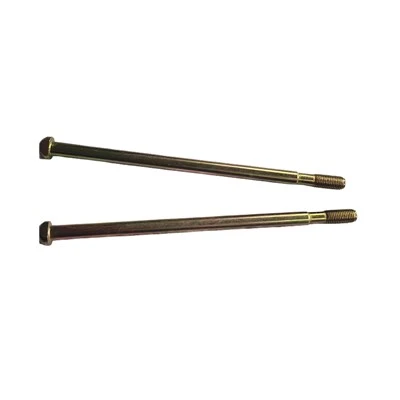
Non-standard hardware and mechanical components are precision parts customized to meet the specific requirements of particular equipment or engineering projects. Unlike standardized, mass-produced items, their primary value lies in personalized designs tailored to unique functional needs. The manufacturing of such components requires a careful balance of material properties, dimensional accuracy, and surface quality. Widely used in factory machinery and on construction sites, these parts serve as essential supports for the stable operation of mechanical systems.
The production of non-standard parts is based on technical drawings or 3D models, utilizing CNC (Computer Numerical Control) technology to achieve high-precision manufacturing. The process typically includes steps such as cutting, drilling, welding, and polishing. CNC cutting-employing laser or water-jet technology-ensures smooth, burr-free edges. Drilling is performed using multi-axis linkage drilling machines, capable of creating complex-shaped or micro-scale holes. Welding processes, such as argon arc welding or laser welding, ensure structural integrity. Finally, polishing brings the surface roughness to an Ra value of less than 0.8, meeting stringent smoothness requirements. The entire workflow is managed by a programmed control system, which minimizes the risk of human error.
Stainless steel is the most common material used, chosen for its high strength and corrosion resistance-qualities ideal for demanding operating environments. Dimensions can be fully customized, with thicknesses ranging from 0.5 mm to 50 mm to accommodate the spatial constraints of various equipment. Tight tolerance control is a key performance indicator; through the use of high-precision machine tools and in-process inspection equipment, dimensional deviations are kept within ±0.01 mm, ensuring a precise fit during assembly. For specialized requirements, value-added services such as surface plating and heat treatment are also available.
Laser-based processing significantly enhances efficiency, reducing the lead time for individual parts to 7 days, with prototyping completed in as little as 3 days-an ideal solution for projects requiring rapid iteration. With an annual production capacity of 100,000 units and 10,000 units of available capacity, the facility is well-positioned to handle small-to-medium batch orders. An integrated, end-to-end production process-from initial cutting to the finished product-minimizes waste and inefficiencies, while a digital management system allows for real-time tracking of order progress, ensuring timely delivery. In factory settings, non-standard parts are frequently used for equipment upgrades and retrofits, addressing challenges where standard components do not fit. On construction sites, they are employed in the assembly of temporary structures-such as supports and connectors-where their customized nature can significantly shorten installation and commissioning times. Although non-standard solutions may entail a slightly higher initial cost compared to off-the-shelf components, they offer superior long-term value by reducing the frequency of maintenance and minimizing losses from operational downtime; they are particularly well-suited for industrial environments that demand high levels of reliability.