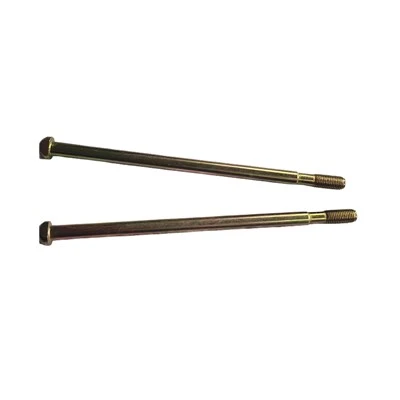
Precision metal components for medical devices are primarily categorized into five areas: surgical instruments, injection/infusion devices, medical equipment, sensing and monitoring systems, and dental treatment tools. The core requirements for these components are high precision and high stability, which are essential for ensuring safe clinical procedures and the accurate operation of medical equipment.
Precision Metal Components for Surgical Instruments
This category includes scalpel handles, blade-securing components, pivot pins for surgical forceps, and locking mechanisms for hemostatic clamps. These parts require extremely low surface roughness and micron-level tolerances for mating clearances, ensuring surgical precision as well as stability during cutting or grasping tasks.
Components for Injection and Infusion Devices
These include needle hubs, plungers, Luer-lock connectors, and sealing gasket bases for infusion pumps. Needle hubs must provide a leak-free connection to the needle, while plungers must exhibit consistent sliding resistance to prevent sticking or jerking during injection.
Precision Transmission Components for Medical Equipment
Common examples include lead screws, precision gears, bearings, and linear guides. These are used for tasks such as moving the gantries of imaging equipment (e.g., CT or MRI scanners), adjusting the positioning of rehabilitation devices, and enabling the movement of end-effectors in surgical robots-applications that demand nanometer-level positioning accuracy.
Components for Medical Sensing and Monitoring
This category encompasses metal housings for physiological parameter sensors, signal transmission pins, and electrode-mounting bases. These components must provide a dust-proof and bacteria-resistant environment for internal electronic parts, while also ensuring stable signal transmission that remains free from interference caused by the metal itself.
Components for Dental Treatment
These include chucks for dental drills, handpiece connectors, abutment screws for dental implants, and positioning sleeves for root canal instruments. Such components must be suitable for use within the confined space of the oral cavity and must also be corrosion-resistant and easy to sterilize.